The Number That Changes the Conversation
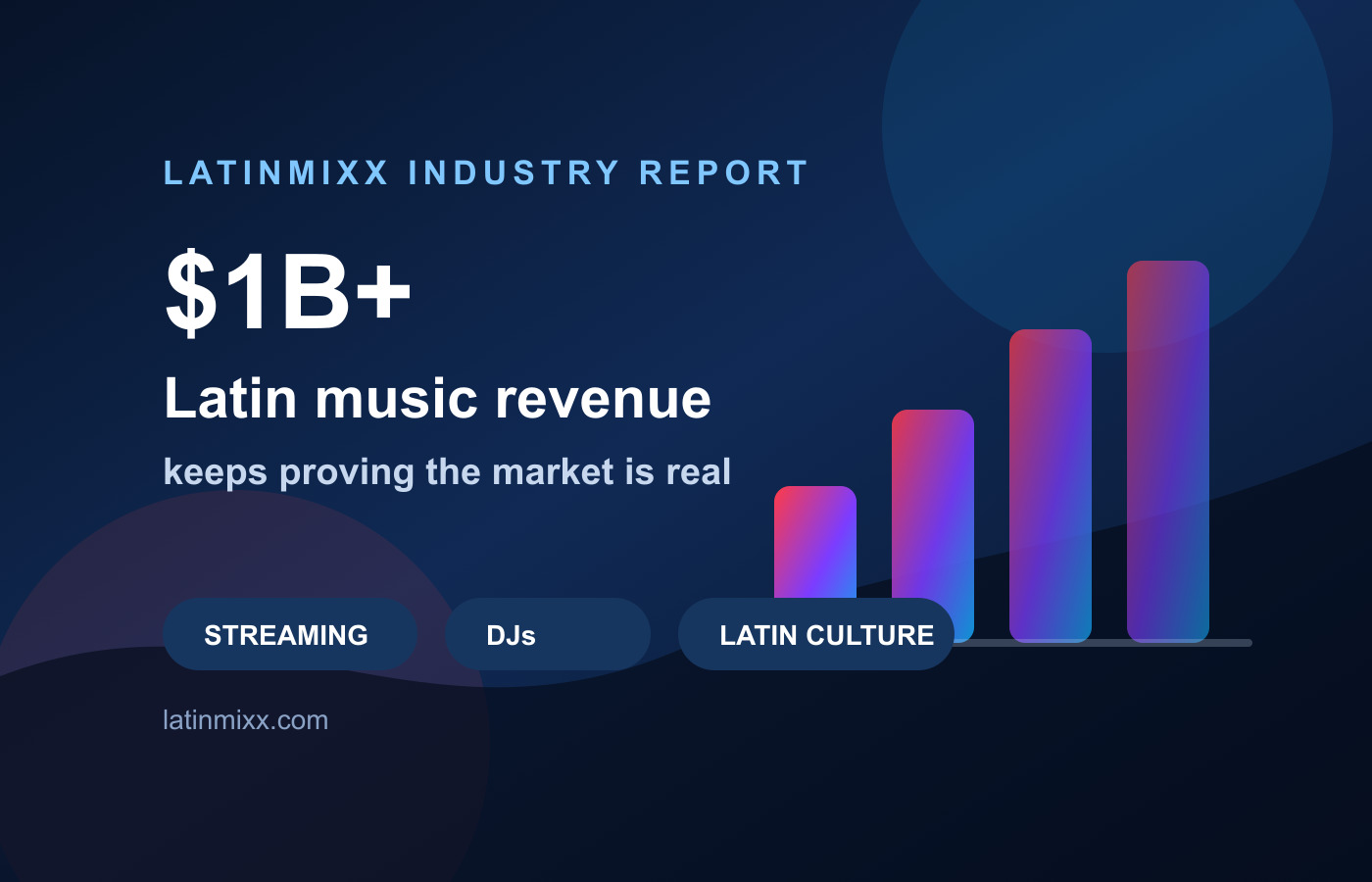
Latin music generated more than $1 billion in U.S. wholesale recorded music revenue, according to Music Business Worldwide reporting on the RIAA year-end Latin music report. That is not just a headline for labels. It is a signal that Latin music has become a serious commercial engine in the United States.
For years, clubs already knew the truth. Reggaeton, dembow, bachata, salsa, regional Mexican, Latin trap, and open-format Latin sets have been driving rooms every weekend. Now the industry numbers are catching up to what DJs have been seeing on the floor.
Streaming Is Carrying the Weight
The biggest lesson is that streaming continues to power the market. When listeners keep replaying Latin music at scale, that creates more leverage for artists, labels, producers, managers, promoters, and DJs who understand the culture.
- Labels have more reason to invest in Latin talent
- Brands have more proof that Latin audiences move real dollars
- DJs have more power when they can break records locally
- Artists have more paths to grow without waiting for mainstream permission
Why DJs Should Care
DJs are still one of the fastest ways a record becomes real in the street. A song can trend online, but if it does not work in clubs, lounges, weddings, festivals, and radio mixes, the record is missing a major piece of cultural validation. This revenue milestone makes the DJ role more important, not less.
Latin music is not asking for space anymore. It is proving the space is already built.
LatinMixx Take
Our take is simple: Latin DJs need to treat themselves like industry players. Build profiles, track cities, collect audience data, post clips, submit mixes, and connect with records early. When the market grows, the DJs closest to the culture should be positioned to win with it.